
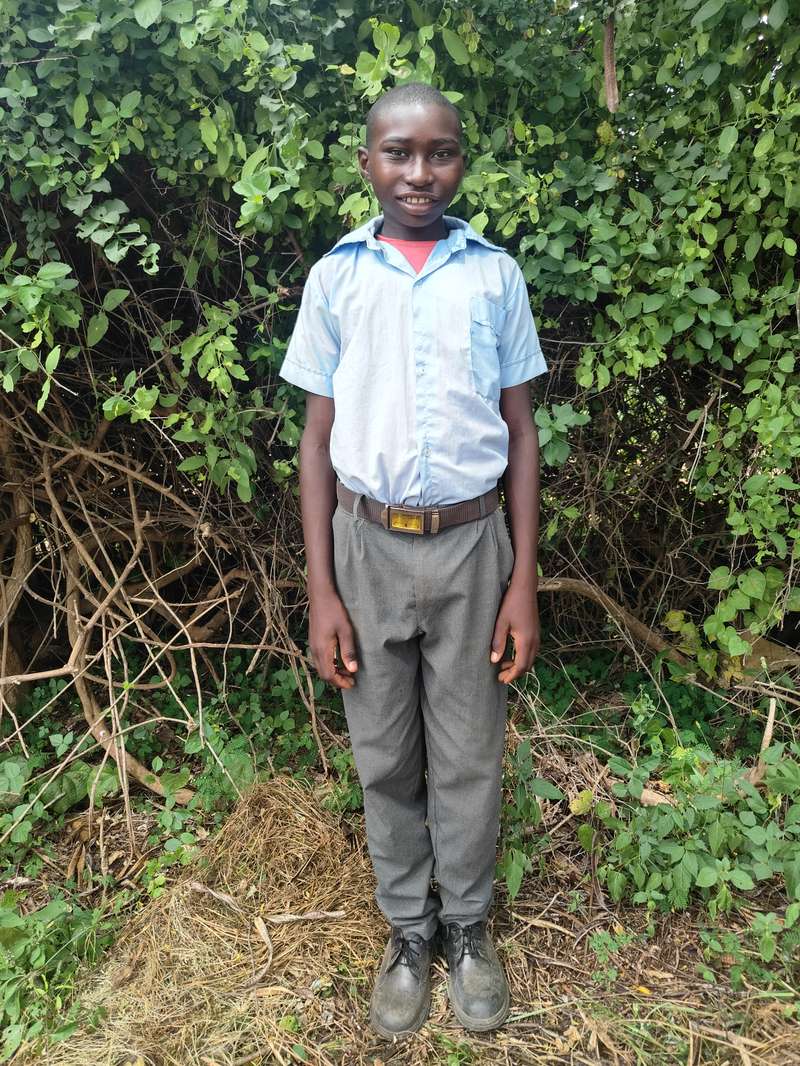
Joshua Kiteme
Monthly Cost: $47.00
Overview
Biography
Joshua is a gentle and joyful young boy. Sadly, his dad died when he was quite young and it has been very difficult for Joshua’s mom to take care of the boys on her own in the land where rainfall is very unreliable and it is rare for anyone to get a job but they look for daily work to buy food for that day. If not for another sponsorship program, Kiteme would not have made it this far in his education. However, that program is no longer able to continue with him and we would like to pick up where they left off giving Kiteme a hand to finish his education and the chance to become all he was created to be. We believe he will be an asset to his family and community!
About Joshua's Home: Kitui
Kitui County, located in eastern Kenya, is one of the country's largest counties by land area, covering approximately 30,496 square kilometers. It had a population of approximately 1.14 million people according to the 2019 national census. The Akamba people are the predominant ethnic community, and Kikamba is the main local language, alongside Swahili and English. Much of the county is semi-arid, and many families depend on subsistence farming, livestock keeping, small businesses, and casual labor for their livelihoods. Kitui faces significant challenges, including widespread poverty, unreliable rainfall, prolonged droughts, water scarcity, and food insecurity. According to the county's 2023–2027 development plan, approximately 47.5% of the population lived below the poverty line, while about 39.4% experienced food poverty. Access to clean drinking water is a major concern, with approximately half the population lacking access to clean water and many households spending more than 30 minutes collecting water. Drought and poor harvests make it difficult for families to maintain reliable food supplies and earn a living, while limited employment opportunities and the cost of education and healthcare place additional pressure on low-income households. Children in particularly vulnerable families may experience malnutrition, interrupted education, and difficulty accessing basic necessities.