
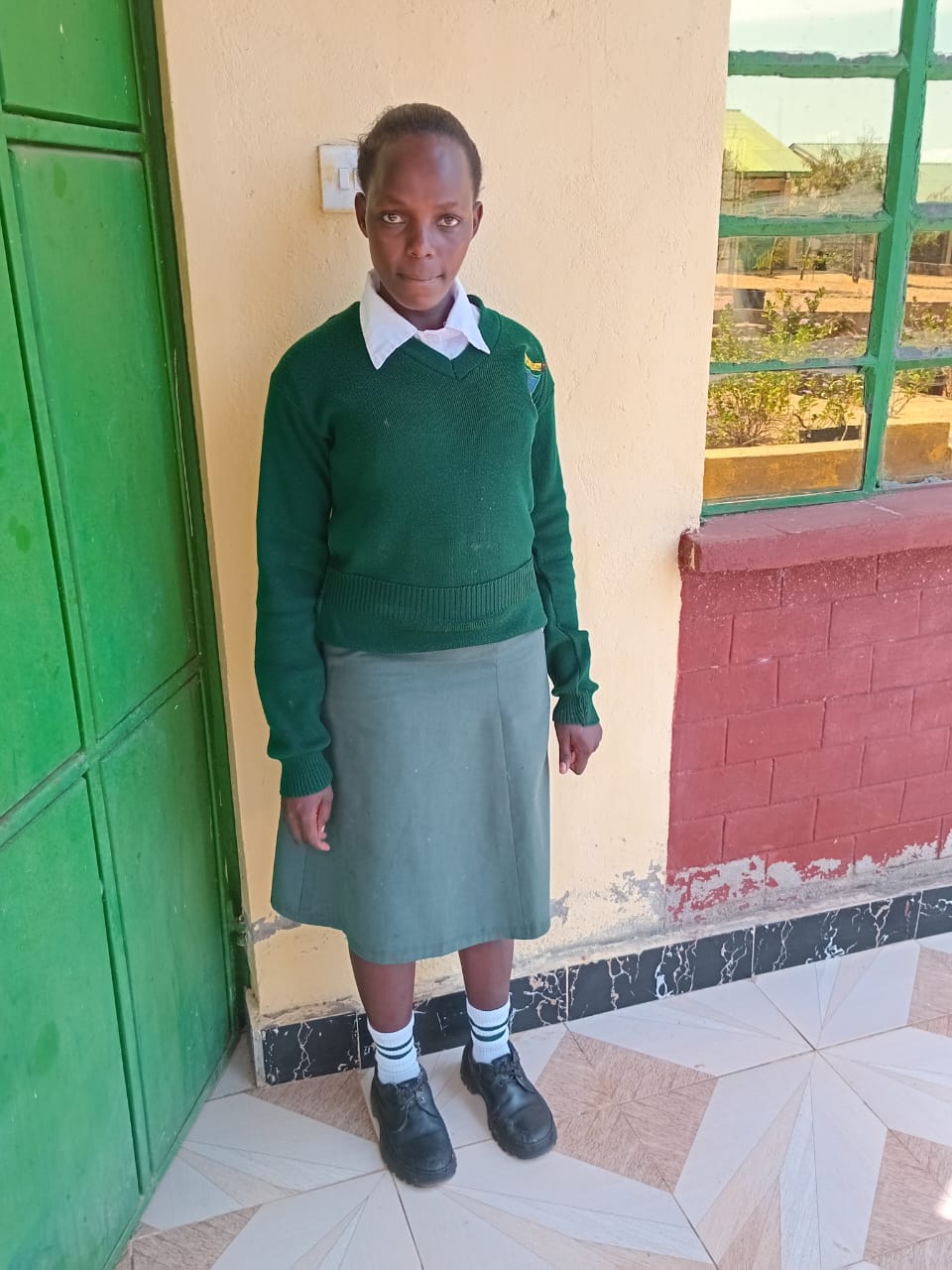
Everlyne Nzangi Muange
Monthly Cost: $51.50
Overview
Biography
Everlyne Muange is a jovial, friendly, and hardworking young woman currently in form three at a secondary school in Kitui County. After the loss of her father, who was the family’s provider, she now lives with her mother and six siblings. Her mother works tirelessly, burning charcoal to try and provide an education for Everlyne and her siblings, but it's a constant struggle, leading to frequent school absenteeism due to financial difficulties. By supporting Everlyne, you would be helping her obtain a brighter future, allowing her to become the person she is meant to be. Would you consider joining her on this journey?
About Everlyne's Home: Kitui
Kitui County, located in eastern Kenya, is one of the country's largest counties by land area, covering approximately 30,496 square kilometers. It had a population of approximately 1.14 million people according to the 2019 national census. The Akamba people are the predominant ethnic community, and Kikamba is the main local language, alongside Swahili and English. Much of the county is semi-arid, and many families depend on subsistence farming, livestock keeping, small businesses, and casual labor for their livelihoods. Kitui faces significant challenges, including widespread poverty, unreliable rainfall, prolonged droughts, water scarcity, and food insecurity. According to the county's 2023–2027 development plan, approximately 47.5% of the population lived below the poverty line, while about 39.4% experienced food poverty. Access to clean drinking water is a major concern, with approximately half the population lacking access to clean water and many households spending more than 30 minutes collecting water. Drought and poor harvests make it difficult for families to maintain reliable food supplies and earn a living, while limited employment opportunities and the cost of education and healthcare place additional pressure on low-income households. Children in particularly vulnerable families may experience malnutrition, interrupted education, and difficulty accessing basic necessities.